My Journey to 6th Place in the Photoprofessionals Competition
When I learned about my 6th place in the 2024 Photoprofessionals Switzerland Photo Contest themed “Mystical,” I was completely overwhelmed. What particularly delighted me was the realization that my collodion wet plate — more precisely, an ambrotype — could stand among a collection of digital masterpieces. In a world where Photoshop and Lightroom dominate photographic tools, it demonstrates that the art of analog photography remains alive and relevant.
Wet Plate – A Piece of History on Glass
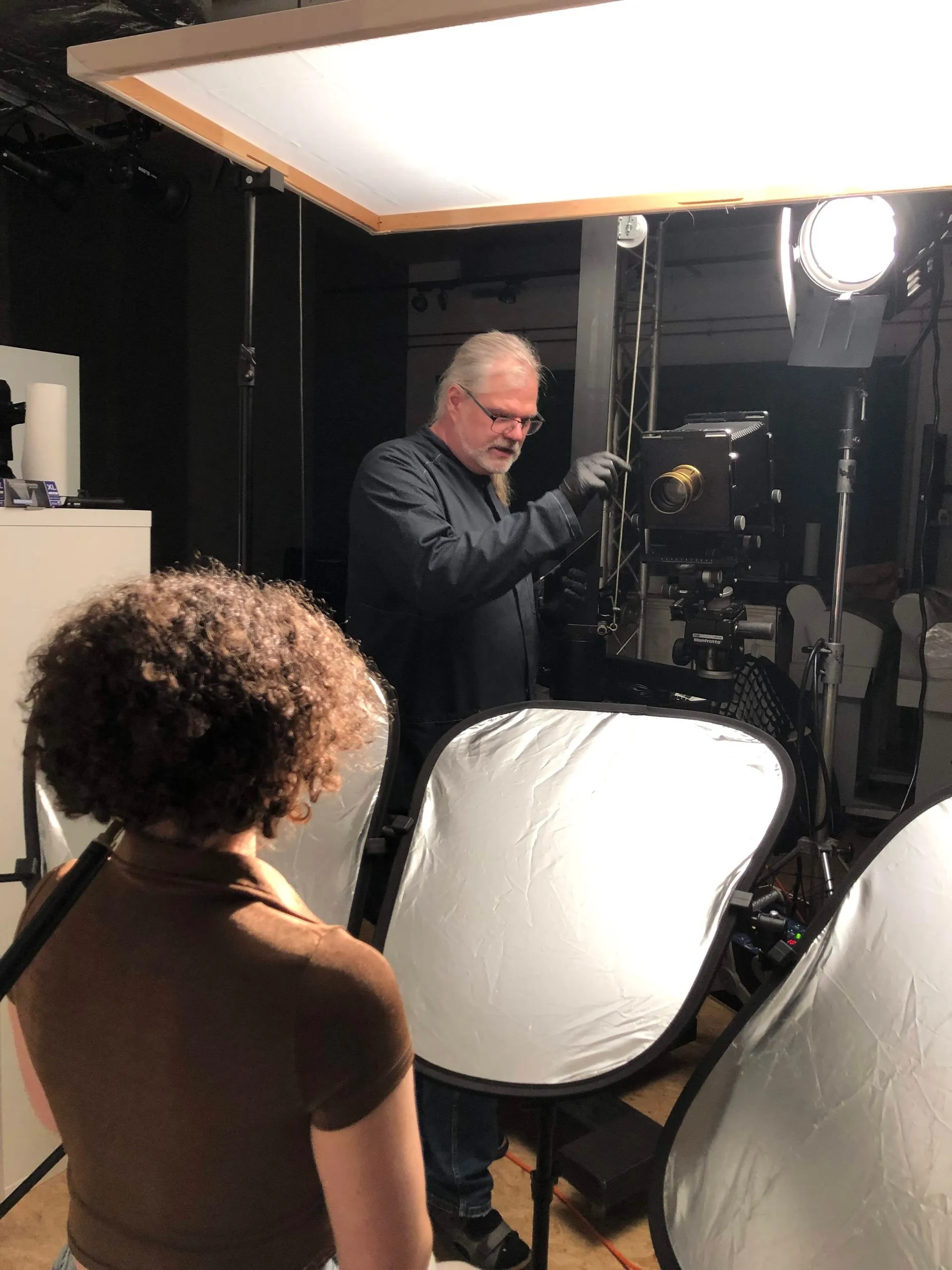
The collodion wet plate was developed in 1851 by Frederick Scott Archer and is a fascinating artifact from the early days of photography. In this process, a collodion solution is applied to a glass plate and sensitized in a darkroom, which is then exposed while still “wet” in a camera. Development occurs immediately afterward — a precise yet sometimes unpredictable procedure that requires not only skill but a deep understanding of the involved chemistry.
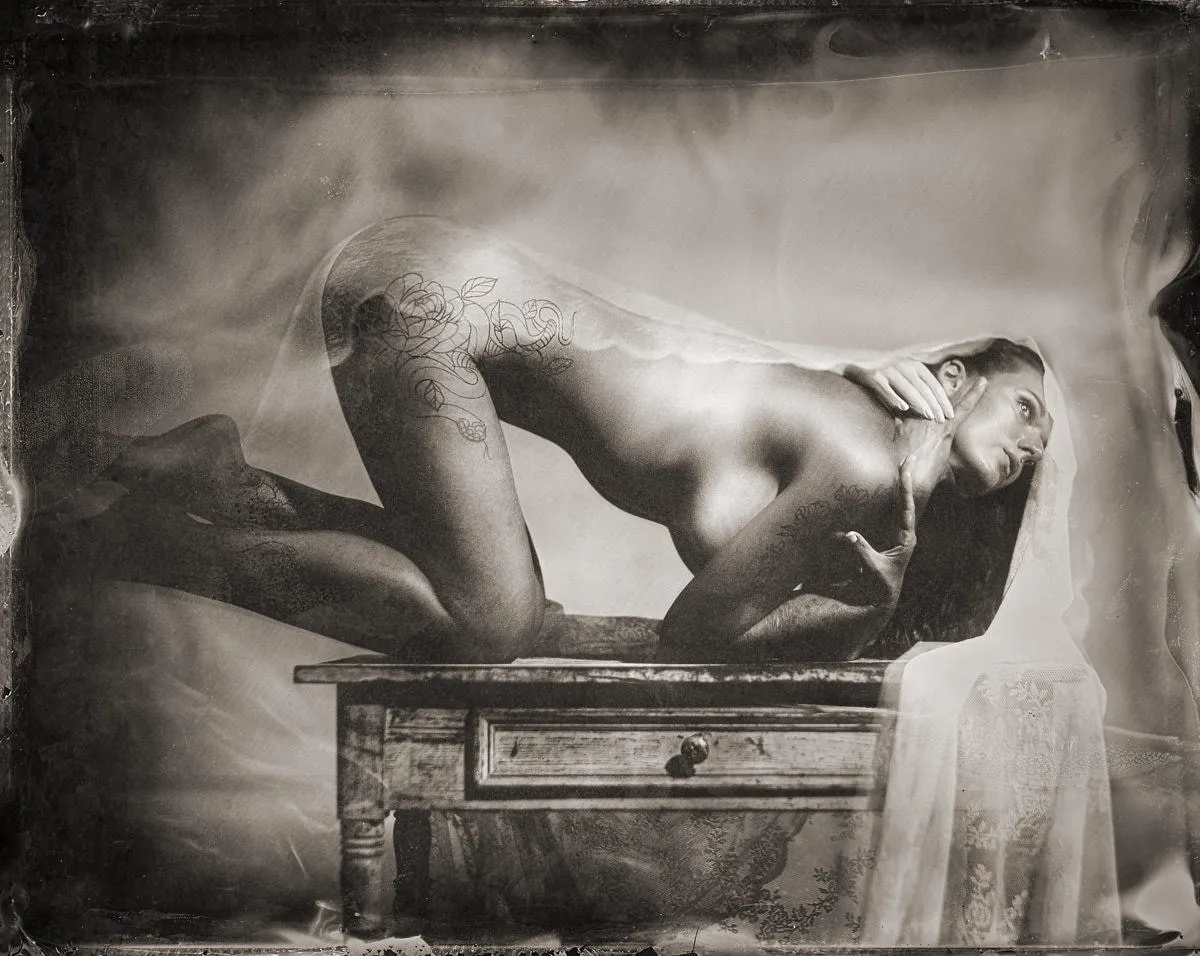
In my image, I used this technique to create something that not only captivates the eye but also provokes thought and confusion. The woman in the image, wrapped in semi-transparent fabric, possesses almost ghostly third hand — the result of a long exposure time and my meticulous handling of the fabric. It’s like a dance with light, where reality and illusion intertwine in fascinating ways.
Analog vs. Digital – The Battle of Techniques
Within the photographic community, discussions occasionally arise about the place analog photography holds in today’s world. Especially in a competition filled with digital submissions, it was a honor for me to reach 6th place with a piece that emerged without any digital post-processing. For me, this shows that the quality and emotional depth associated with wet plate techniques remain competitive.
To reach the jury (Hanna Neret (Sweden), Brendan de Clerk (Netherlands), Scott Johnson (UK), and Tim Wilde (UK)), the wet plate naturally had to enter the computer — meaning it was scanned so the international jury could view it. And with that, much was lost, because the image behind glass is not the same as a scan — the magic is gone. But an international jury also means that you can’t even fly them in.
My demands for authenticity and handcrafted execution led me to create unique works in an era dominated by digital, non-physical media. In a time when the question of “real” art often arises, the wet plate is not only a true unique piece — but also a beautiful and nostalgic reminder of photography’s roots.
Why Wet Plate Photography Is More Than Nostalgia
Working with the wet plate, I have countless times appreciated the unexpected flaws and the unique beauty inherent in each individual image. This magic — born from the interplay of light, chemistry, and human creativity — is what fuels my passion for photography. It’s a return to fundamentals, where every photograph is a risk and an adventure.
I am grateful for the opportunity to share my perspective in such a prestigious competition and hope that my placement among the top encourages others to explore the versatility and extraordinary possibilities of analog photography. Let us together rediscover the mystical world of the wet plate — beyond pixels and post-processing, into the magical realm of photography shaped by craftsmanship and inspiration!