Viewing room

Viewing room
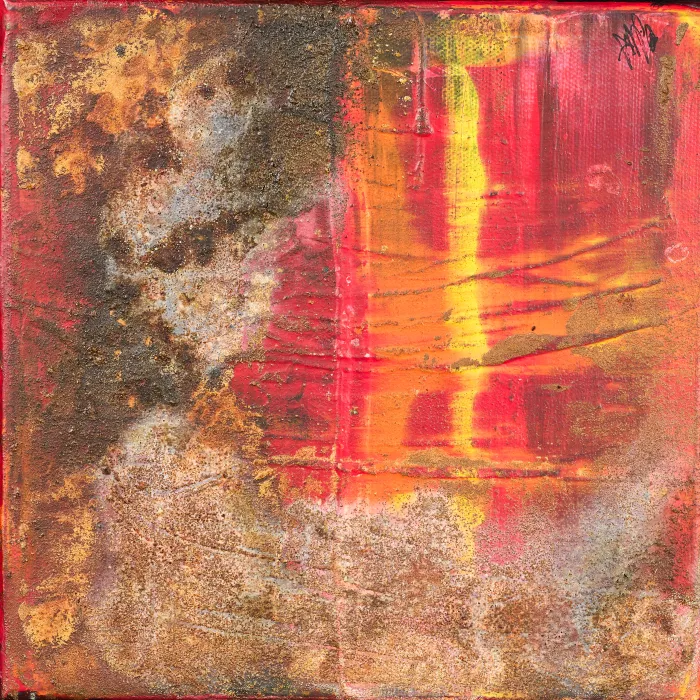
acrylic painting with rust, red and yellow
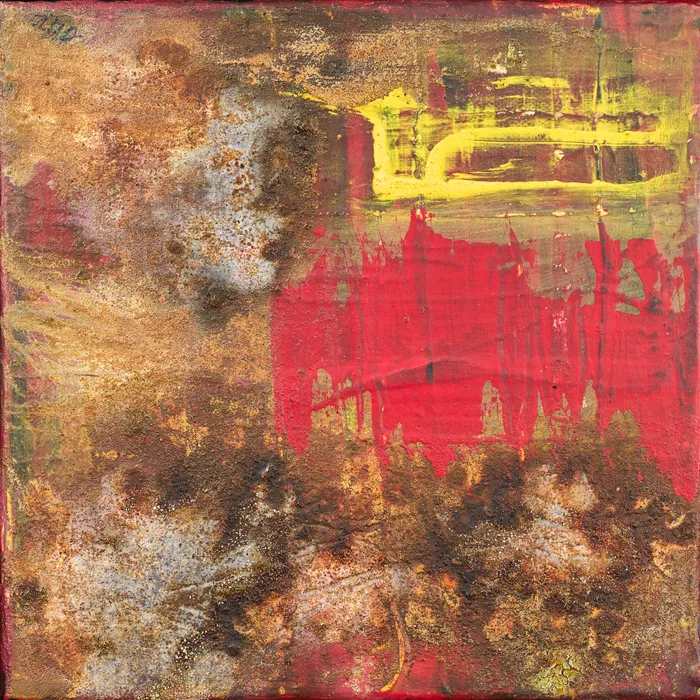
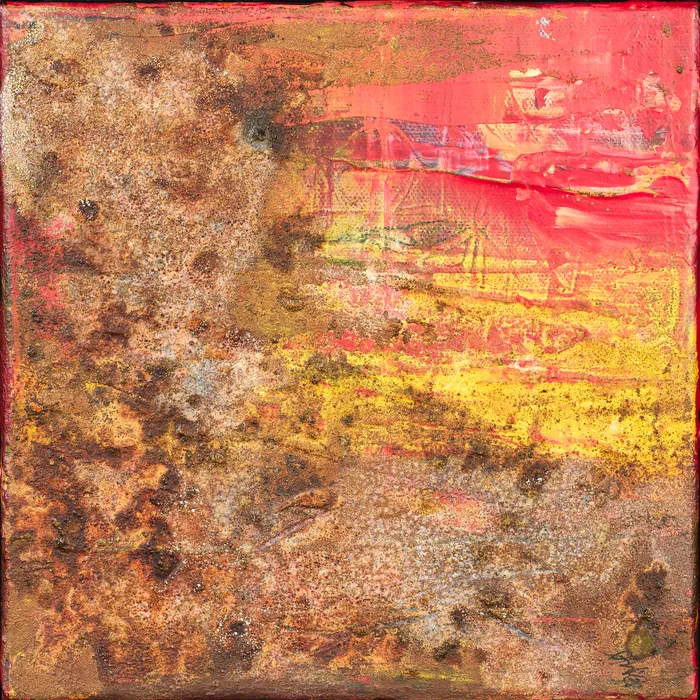
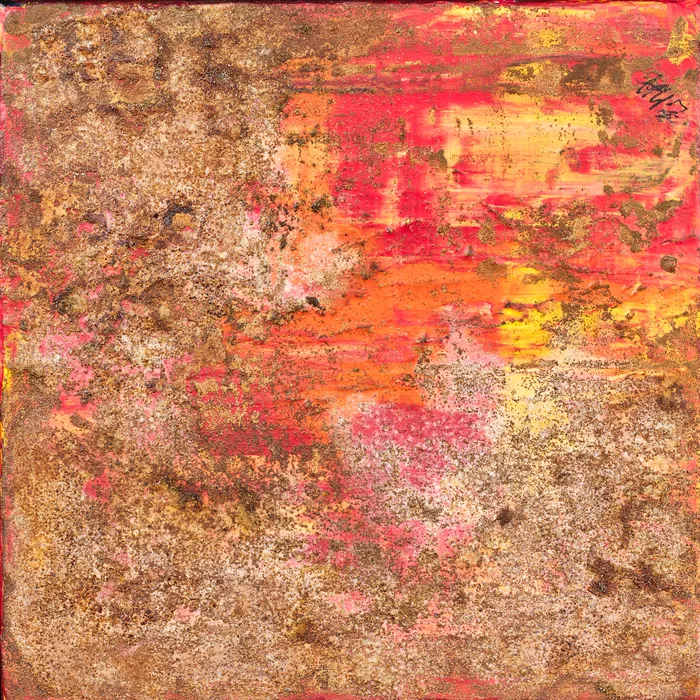
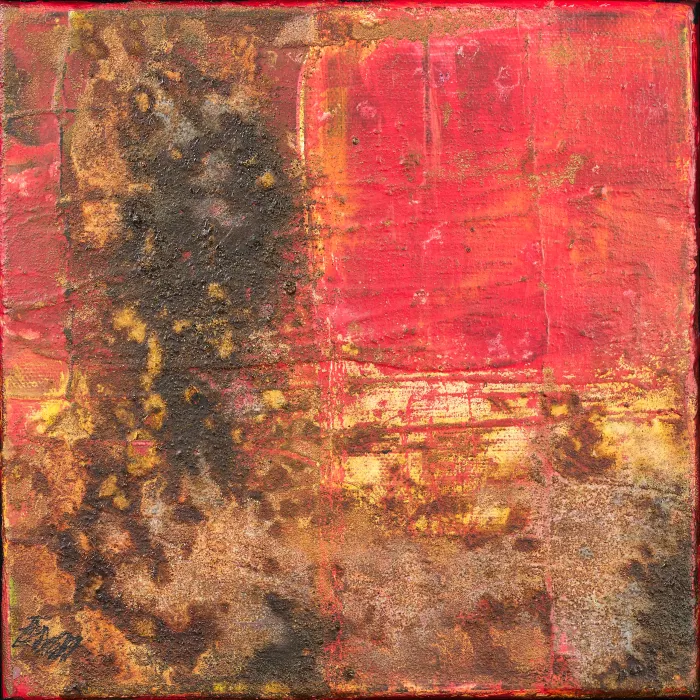
A square painting with a reddish border predominantly features brownish-red-brown textured surfaces, traversed by yellow and red bands that overlap in layers.
acrylic painting with rust, red and yellow
Q-AD IV: a red patch in the upper right corner, yellow streaks, and rough brown rust patterns on lighter areas.
Q-AD V: red and yellow bands to the right of a rough, brown, and light-colored rust surface.
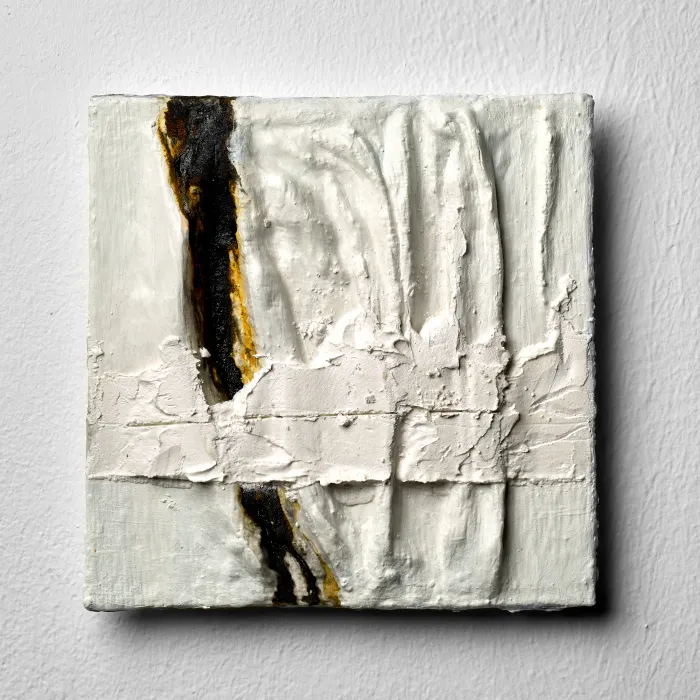
A dark, slightly curved line runs through the light-colored square near the left edge. Ochre-brown borders accompany it. A wide white horizontal band interrupts its course; on the right, elongated raised areas contrast with it. Two directions meet without one completely obscuring the other.
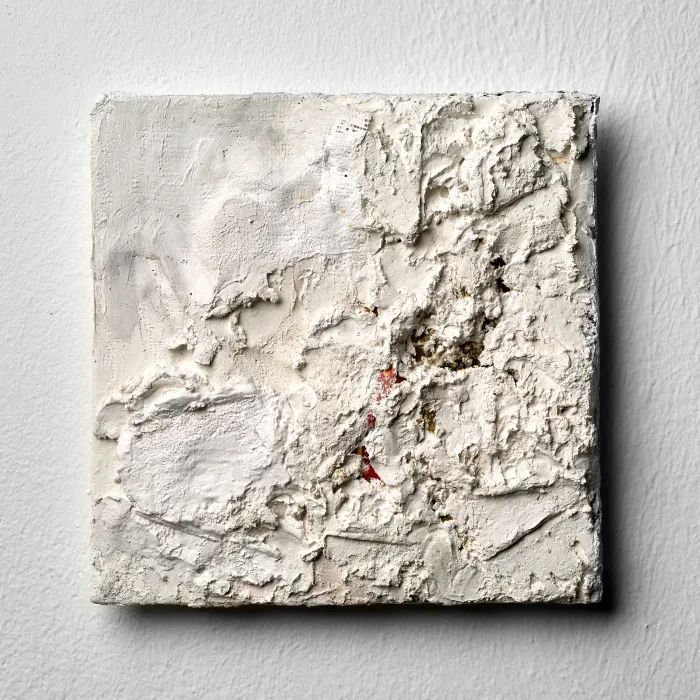
The white surface is dense, irregular, and heavily fractured. Especially on the right, edges and raised areas jut forward. In between, small dark, brownish, and red spots remain visible. The eye does not find a single continuous pattern here, but rather many interruptions within a confined space.
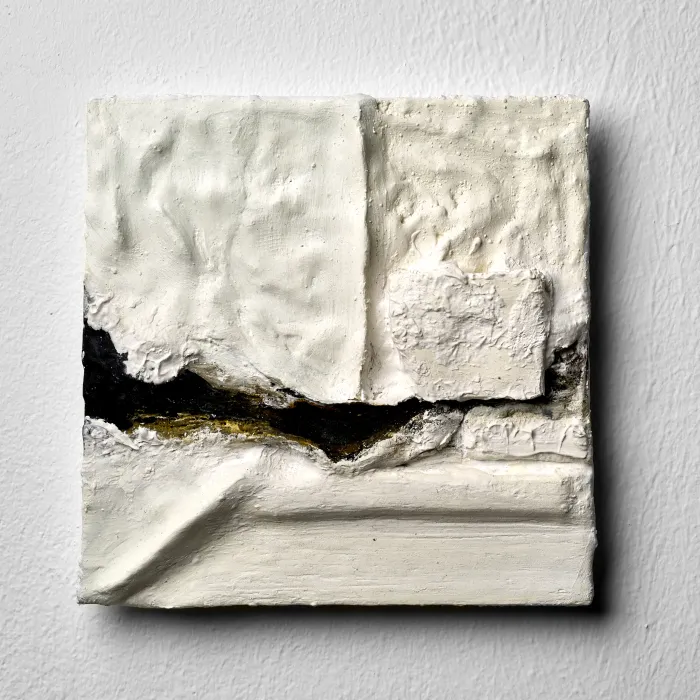
A narrow, dark opening remains between two large, light areas. The protruding edges above it make this spot appear particularly narrow. The serene white and the irregular slit define each other: even a small opening transforms the entire square.
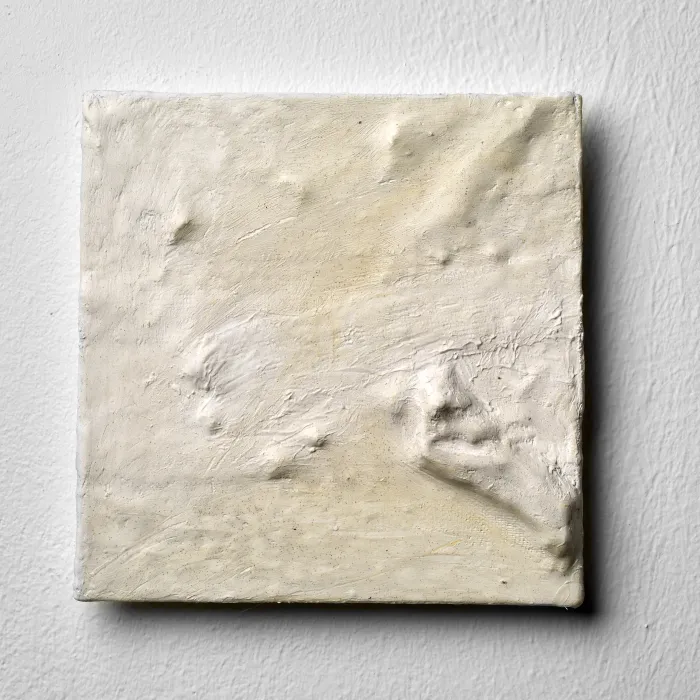
The light-colored area is subdued. Only upon closer inspection do a few raised areas and subtle, warm color transitions become apparent. A small, folded shape emerges in the lower right corner. Within the series of five, this work makes room for the more subtle variations.
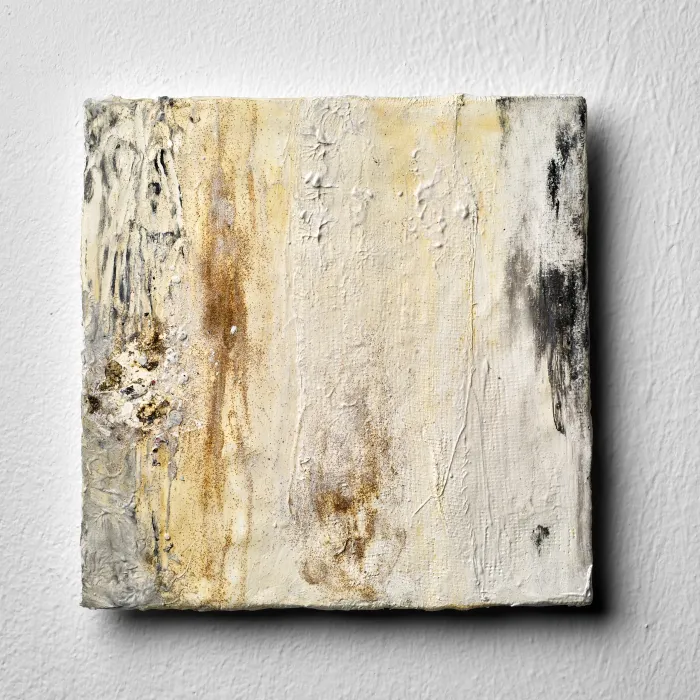
Dark remnants and ochre-brown vertical streaks accumulate along the left edge. On the right, dark smudges contrast with a lighter area. The more open center bears finer traces. Not everything is equally prominent; it is precisely what remains at the edges that draws the viewer’s gaze into the image.
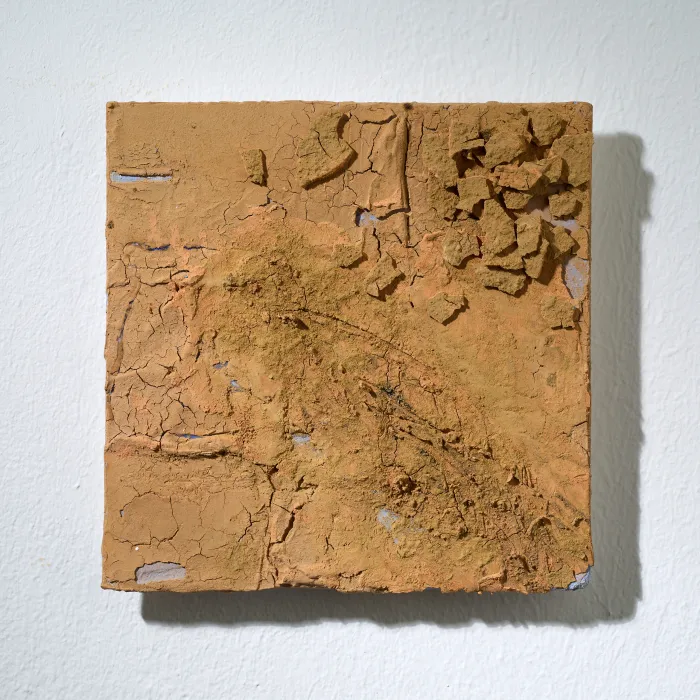
Cracks of varying sizes and a darker diagonal zone run through the ochre-colored surface. Larger clumps stand out in the upper right corner. Small blue openings are located along the edges and in the gaps. The surface alternates between fine detailing and distinctly protruding sections.
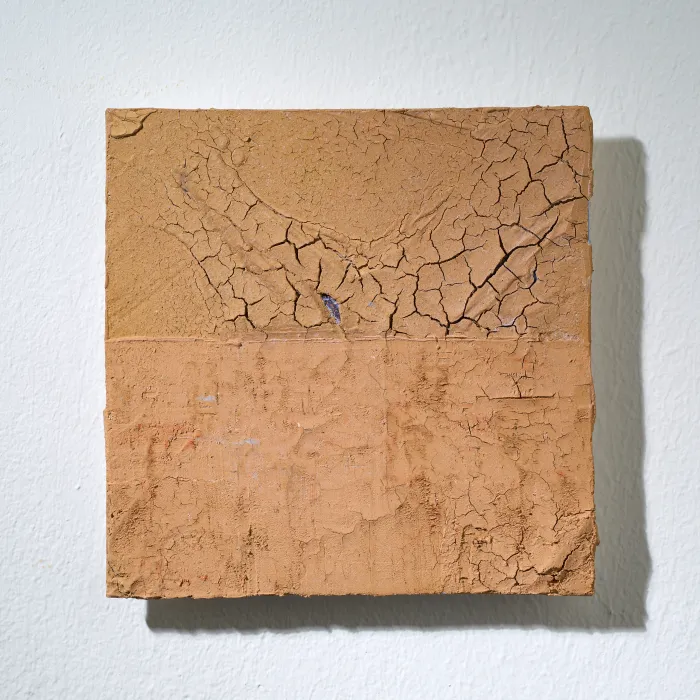
An almost horizontal division separates a more fractured upper zone from a calmer lower surface. Larger fractures in the upper right and near the center lend weight to the surface. The subdued lower area makes these differences all the more apparent.
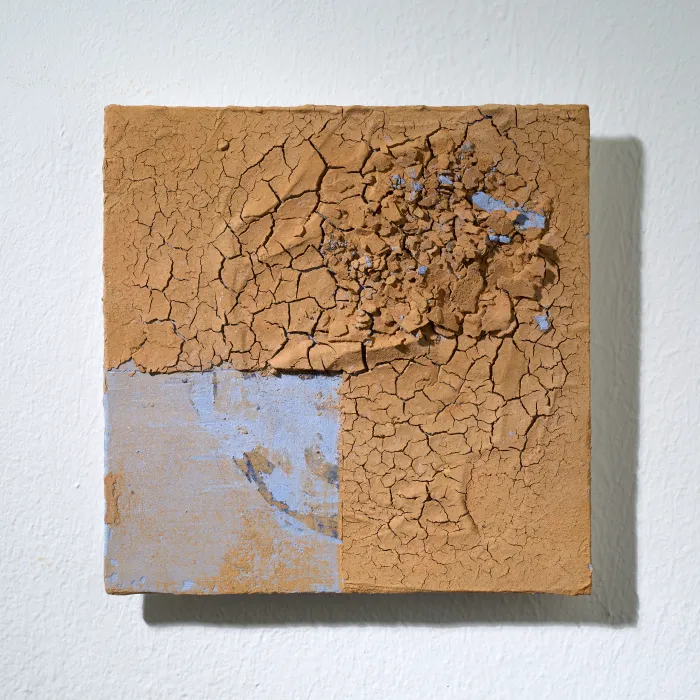
A large, roughly rectangular light-blue field opens up in the lower left corner. To the right and above it, the ochre-colored top layer with its dense network of cracks remains intact. The clear shape of the opening contrasts with an irregular surface and establishes a different scale within the image.
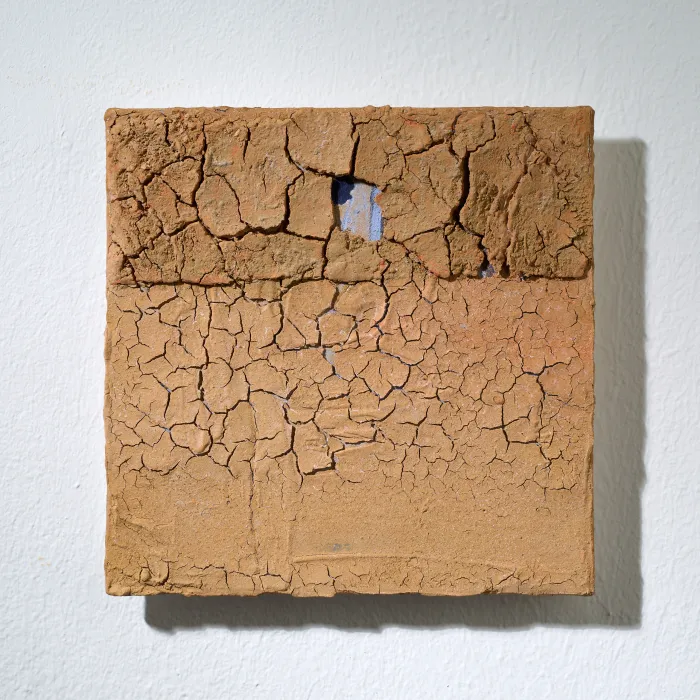
Larger clumps and wide fissures in the upper section sit atop a finer network of cracks. Near the upper center is a small blue opening. Horizontal and vertical divisions establish an order that is further subdivided by the fractures.
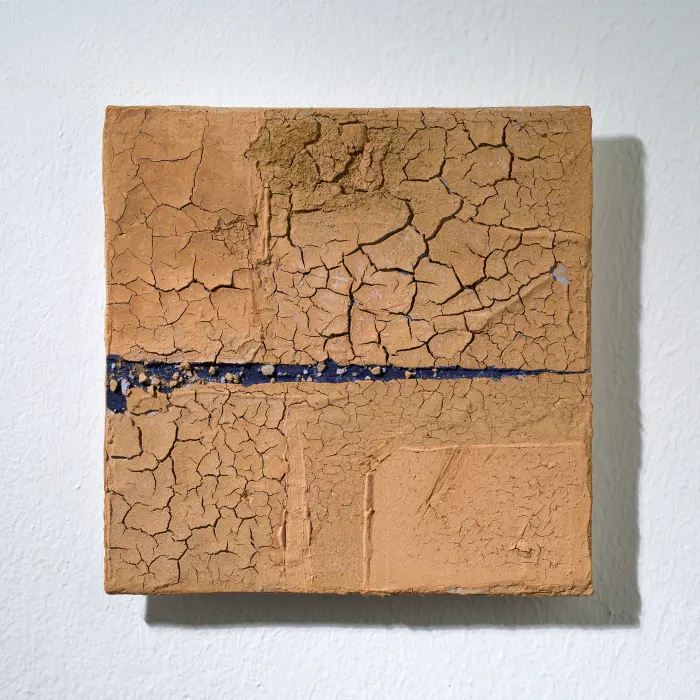
A narrow blue line runs through the square at roughly mid-height. Above it are larger clumps and cracks; below, finer networks alternate with calmer areas. The blue line holds these different areas together without smoothing out their irregularities.
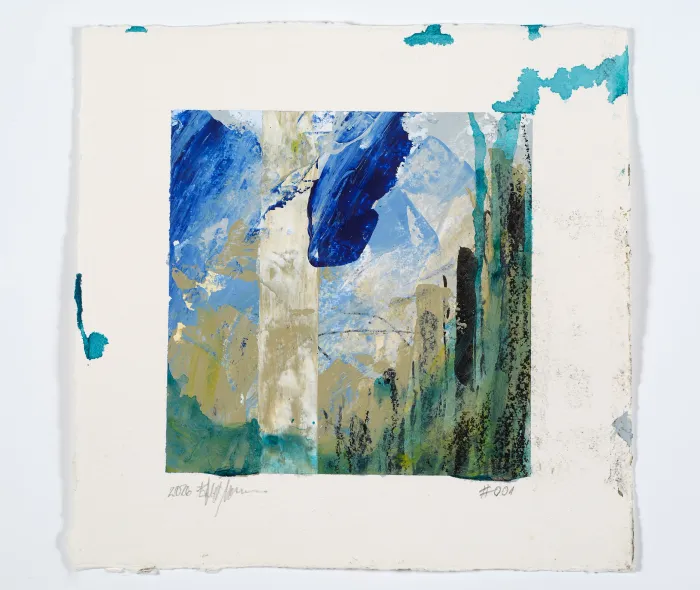
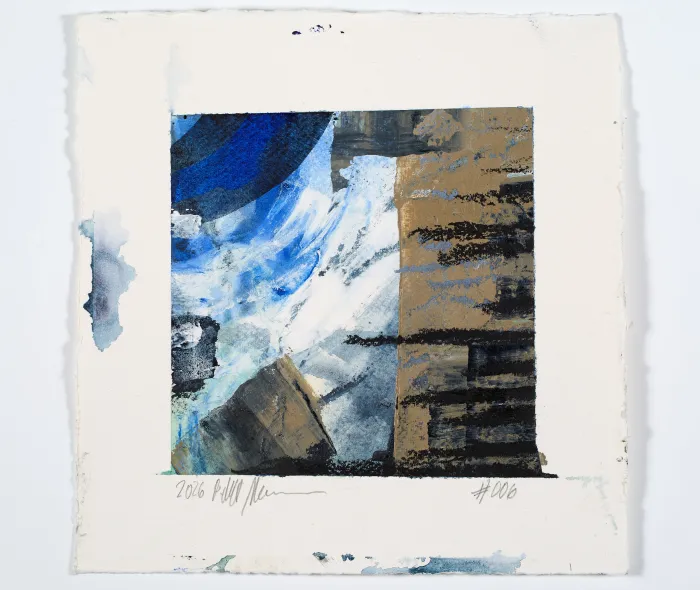
Light blue and beige-white areas meet bold blue streaks. On the right, a darker vertical zone frames the image. Turquoise streaks extend beyond its edge onto the light-colored paper margin.
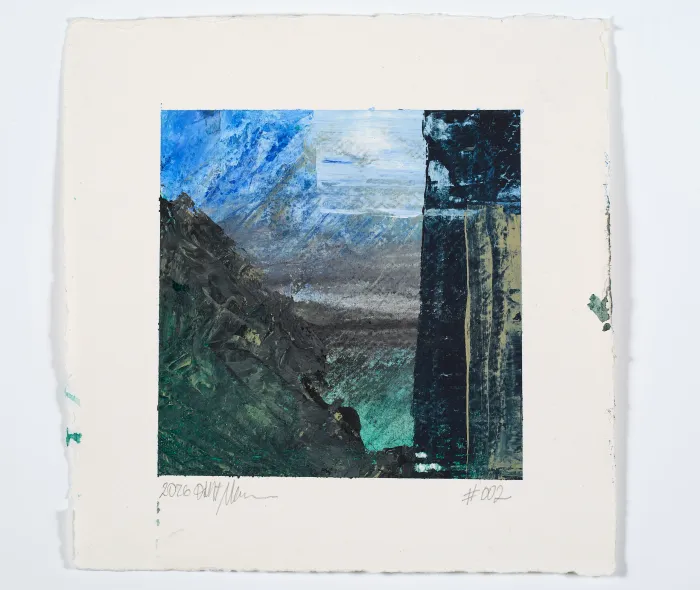
A lighter blue-and-white section lies over a dark green-to-black field in the lower left corner. On the right, a dark vertical line borders the area. The contrasting directions create a sense of spatial openness without depicting a specific location.
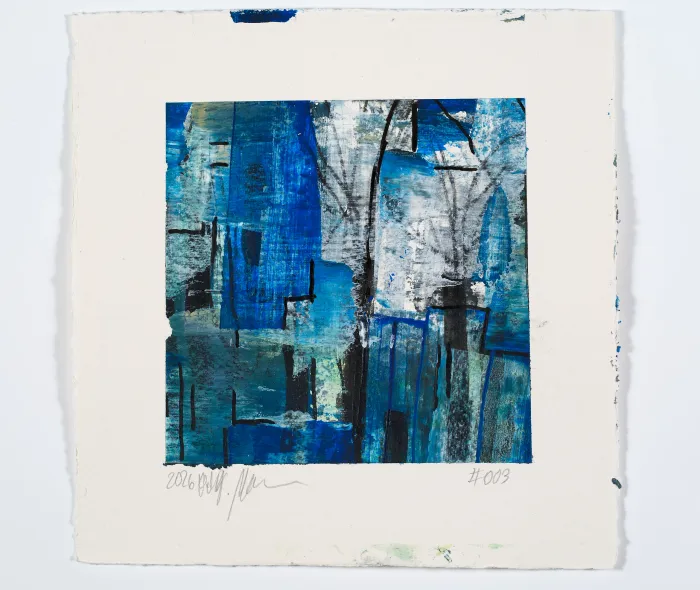
Blue and turquoise bands form the vertical structure of the image. Light overlays and black, angular lines interweave among them. Horizontal lines disrupt the vertical order and connect the individual color fields.
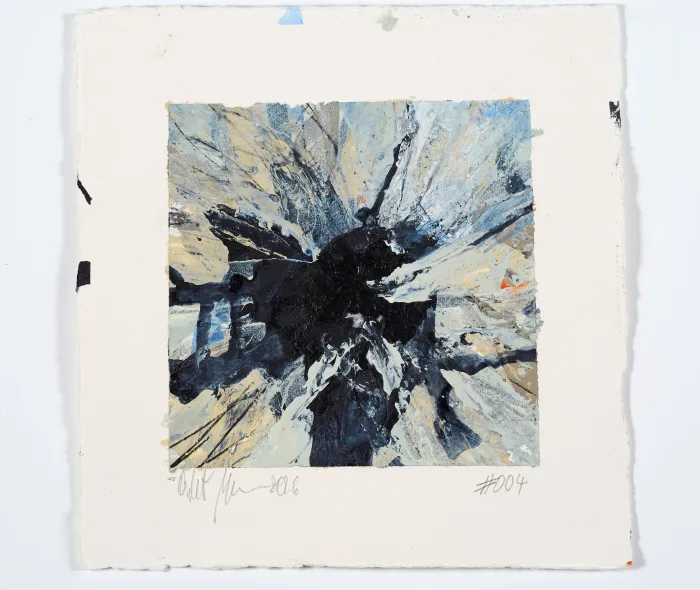
From a dark concentration near the center, light and dark lines radiate in several directions. The movement disrupts the rectangular order that characterizes many other sheets in the series. The wide, light-colored paper margin gives it space.
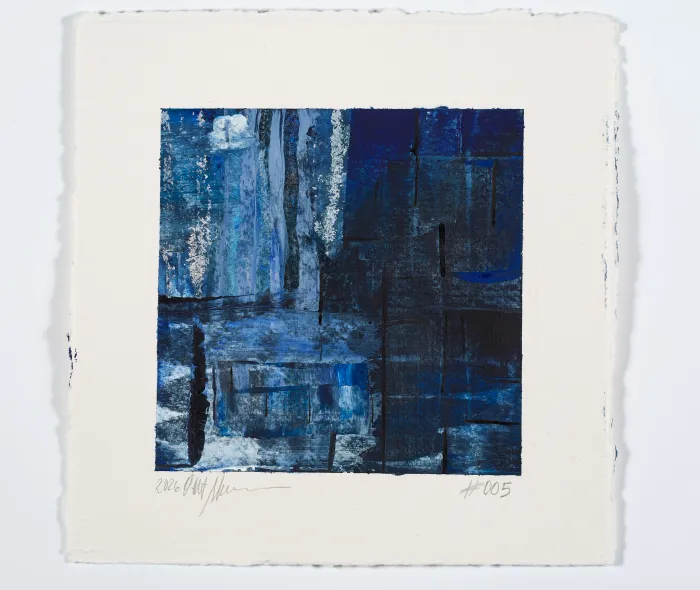
Dark blue vertical and horizontal zones form a dense pattern. To the left of center, a light-colored vertical section remains open. Narrow lines and recurring rectangles break up the dark area.
A large, light diagonal line runs across the left side and the center. On the right is a beige-colored area with dark horizontal streaks. At the vertical edge, different directions and levels of brightness meet.
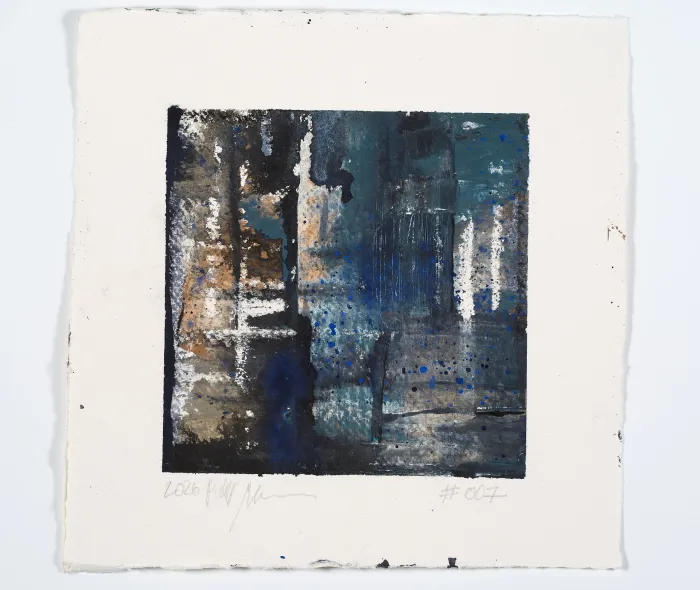
A dark field of blue-green and brown is interrupted by narrow, light-colored openings. The vertical stripes remain uneven and are obscured in places. Up close, the intricate pattern of the surface becomes apparent.
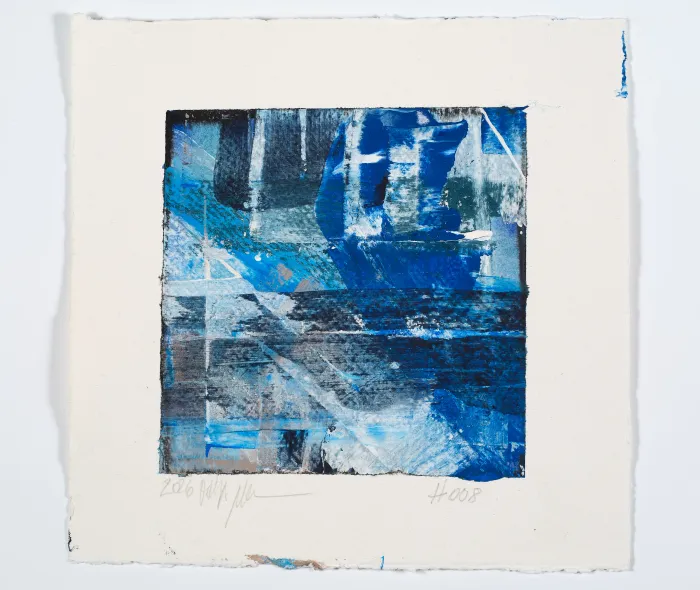
Vibrant blue and turquoise meet white overlays. Diagonal lines crisscross rectangular sections. The lighter lower half opens up the composition and provides a contrast to the denser upper areas.
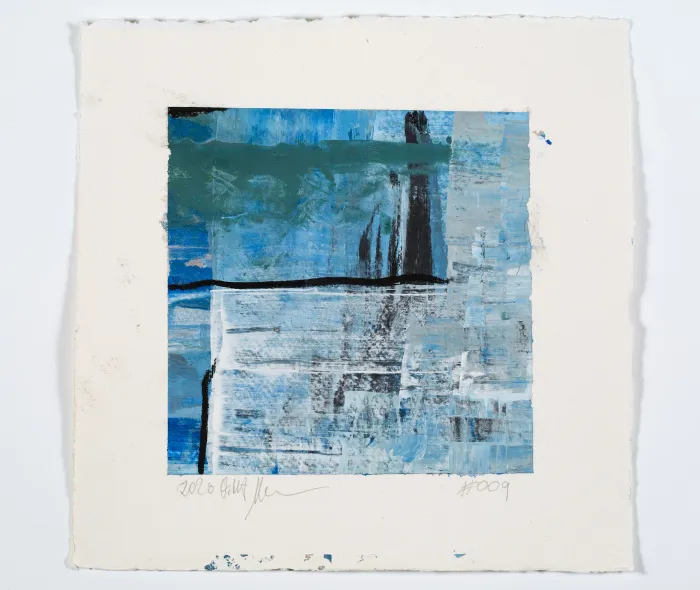
A broad turquoise field lies over lighter gray-blue areas. A dark horizontal line draws a boundary; vertical lines are added on the right and at the bottom. Large, calm areas and small interruptions together define the composition.
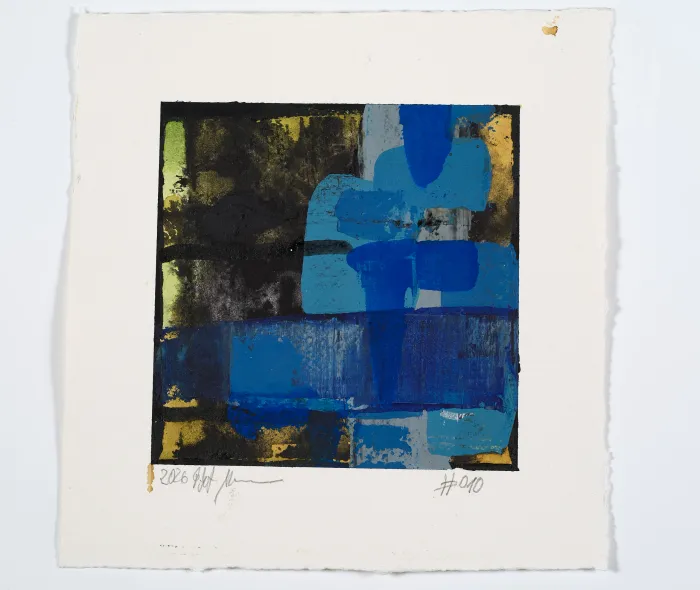
Vibrant blue and turquoise blocks stand out against dark and yellowish-highlighted areas. The larger areas of color are clearly set off from one another. Small traces and interruptions keep their boundaries open.
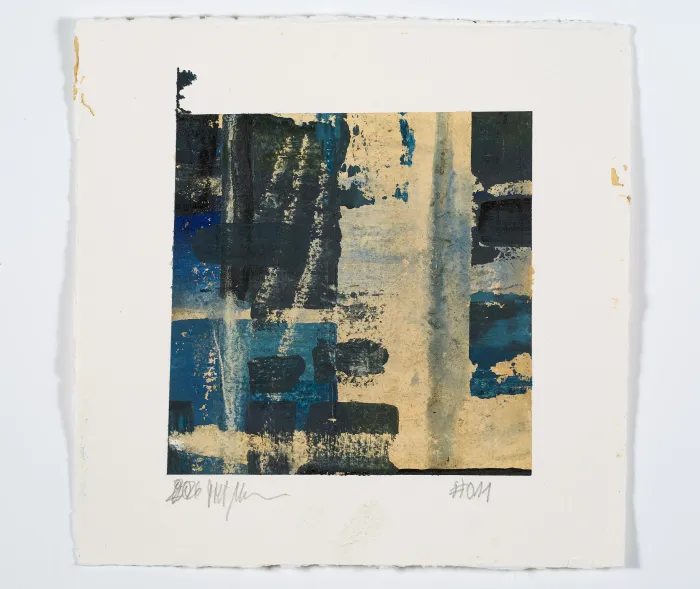
Beige-colored vertical sections meet dark blue-green. Wide, dark horizontal shapes connect and break up the composition. The lighter ochre-beige zone near the center is situated between the heavier sections on either side.
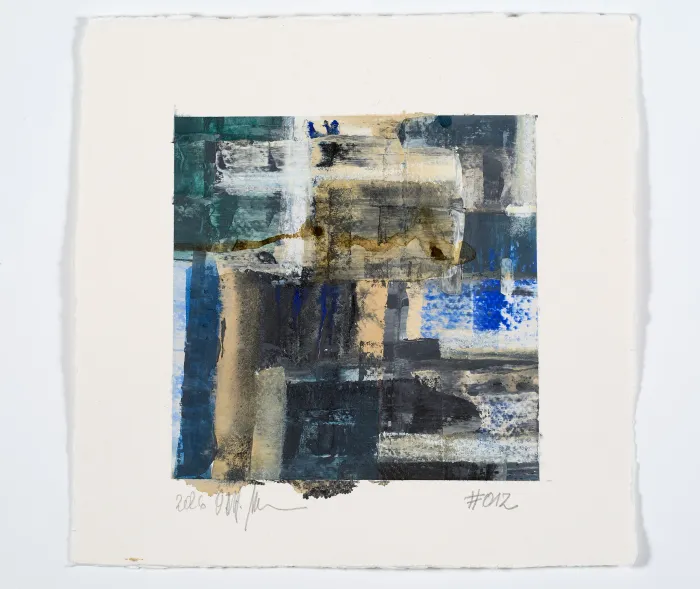
Light, beige, blue-green, and black rectangles and bars interlock. At the top is a light horizontal area; below it, the darker sections become denser. Individual streaks of color extend beyond the edge of the square.
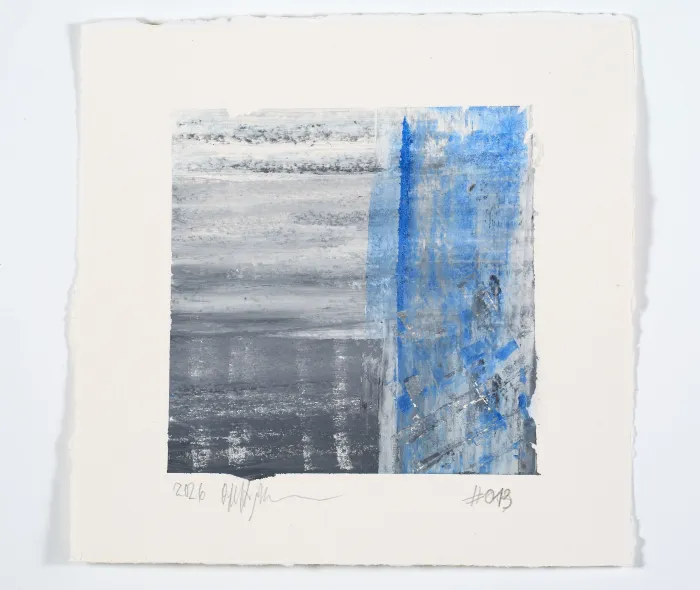
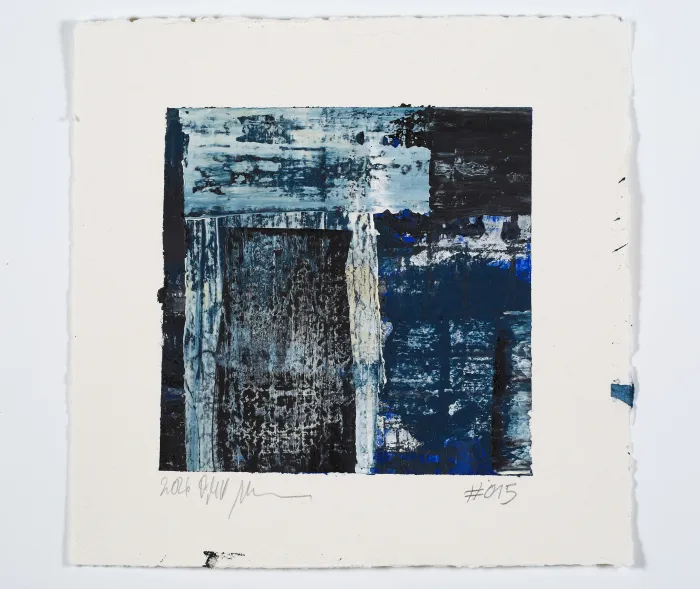
Grayish-white bands structure the left side, while a lighter blue area is visible on the right. A dark area in the lower left lends weight to the composition. Larger, contiguous areas and subdued contrasts make this sheet appear calmer within the series.
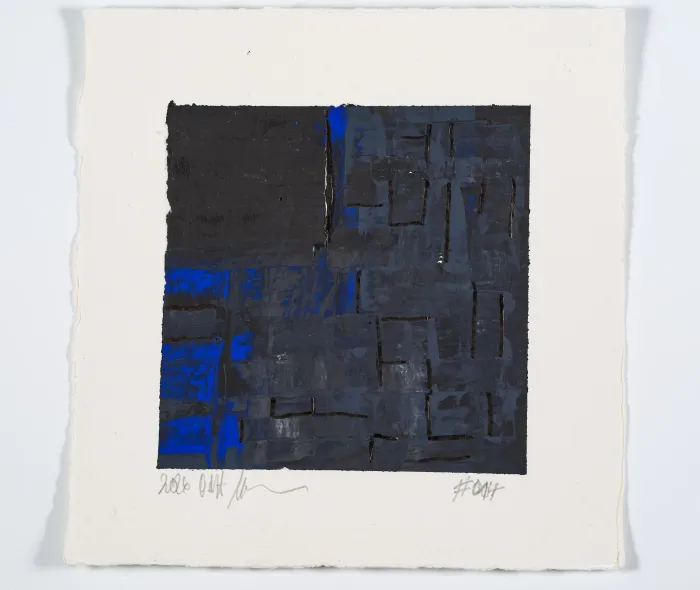
The heavily darkened image area allows blue to shine through in certain spots. A large dark area in the upper left is contrasted by smaller, angular structures on the right and below. The differences are particularly evident in the interplay between the large area and the surface texture.
Light vertical and horizontal lines divide a dark blue field. Their intersections contrast with the more solid areas, especially in the upper right. The light paper margin maintains a distance from the dense picture area.
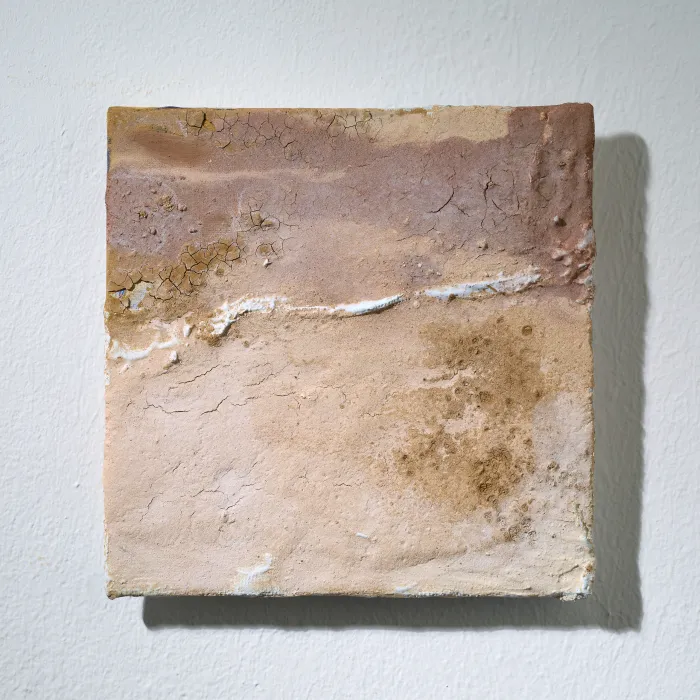
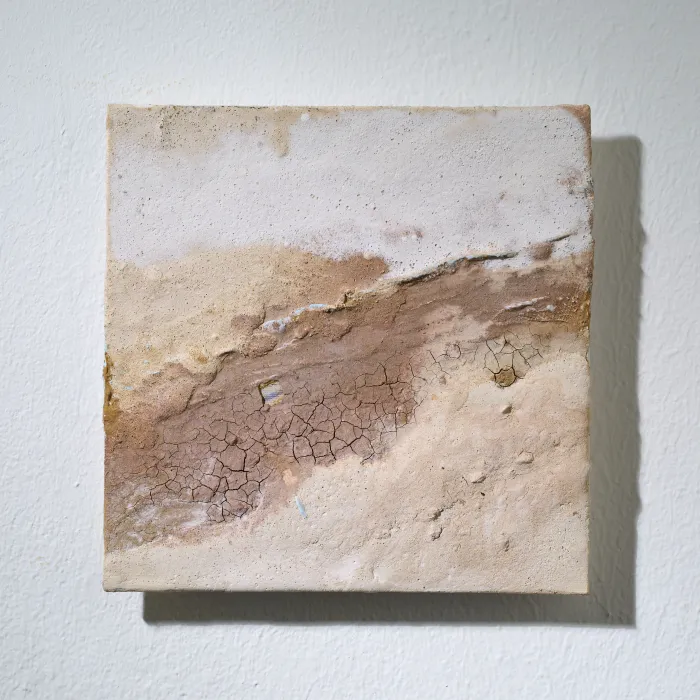
A light-colored, jagged layer edge runs through the center. Above it lie rosy-brown fields with scattered clusters of cracks; below, a larger light-colored area opens up. Toward the right, the surface becomes denser. The work thrives on the interplay between these calm and more fragmented areas.
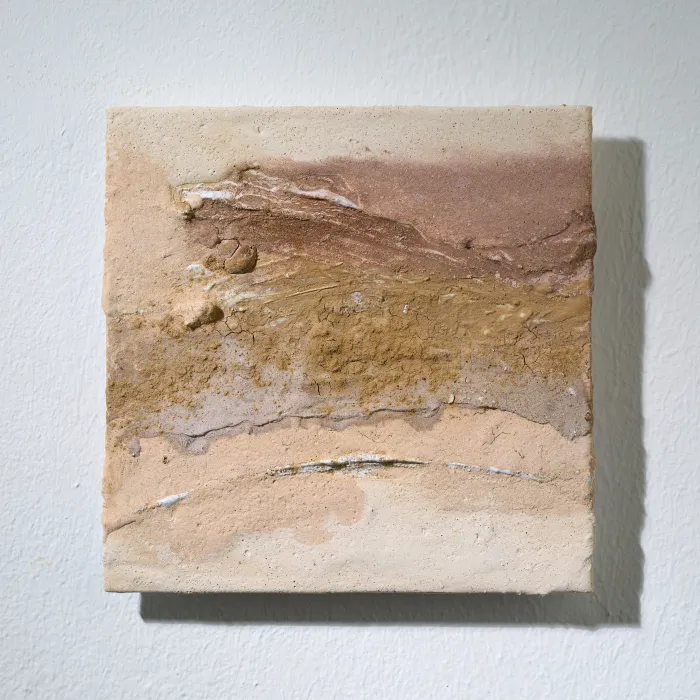
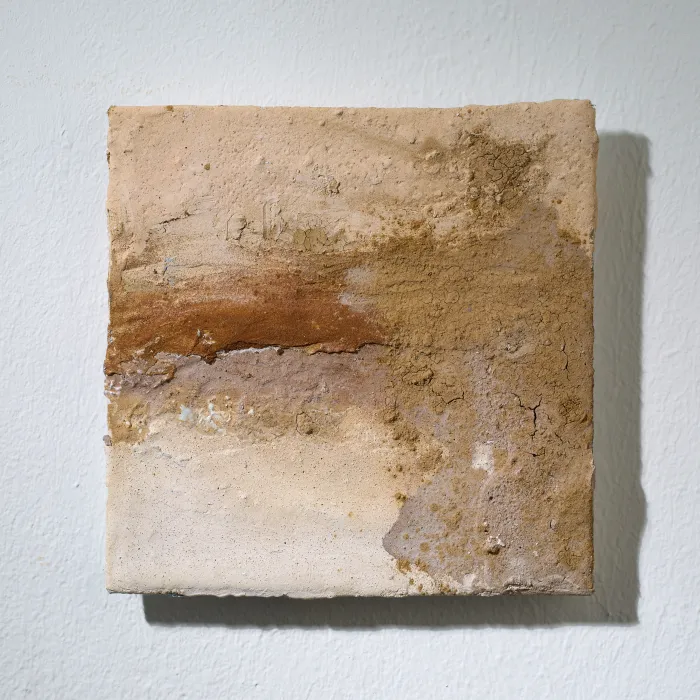
Several horizontal layer edges divide the surface. A darker, textured zone lies above an ochre-colored field with fine cracks. Light areas at the top and bottom edges create space around the dense center.
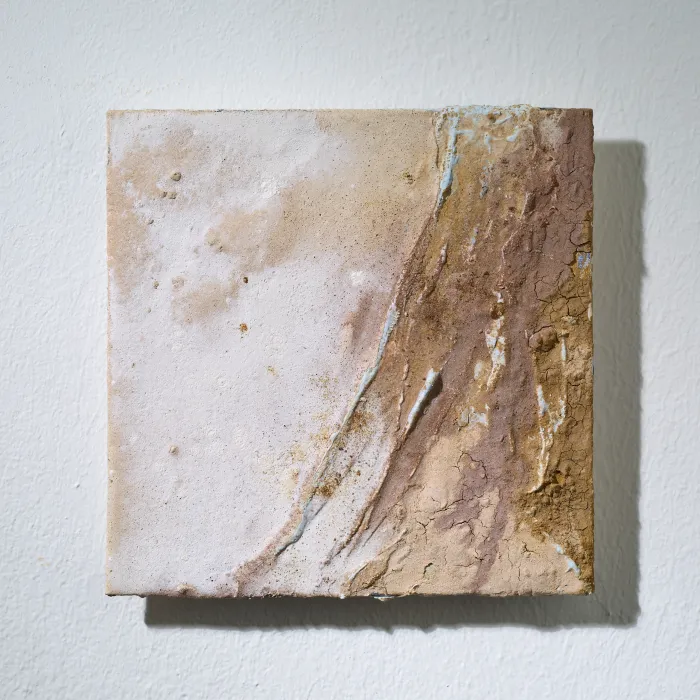
A large, light-colored area on the left meets a denser zone in brown and ochre. The transition runs diagonally across the square. Narrow, light-colored and bluish openings break up the edge and draw the eye to the overlapping layers.
A jagged diagonal zone rises from the lower left to the upper right. Below the edge lies a distinct network of larger cracks. Above it, the surface remains lighter and smoother. The two areas give the image different visual weights.
A brown streak of color extends from the left edge to a denser, ochre-colored area on the right. Cracks and small raised areas contrast with a lighter, more open zone in the lower left. The layers remain recognizable as distinct areas while simultaneously intertwining.